How These Posts Were Written — and How You Can Verify Them
A companion to the Technical Breakdown series on my 4-year engagement with Prestige Men's Health, and to how I started there.
AgentiCRM is a company built around agentic AI. It would be a little hollow to publish seven posts about engineering judgment, verified claims, and "trust but verify" — and then not apply that same standard to how I wrote them. So this post is exactly that: a straight account of my research process, what's real versus illustrative in each post, and exactly how you can check my work against my own public GitHub history.
The source of truth: real commit history, not memory
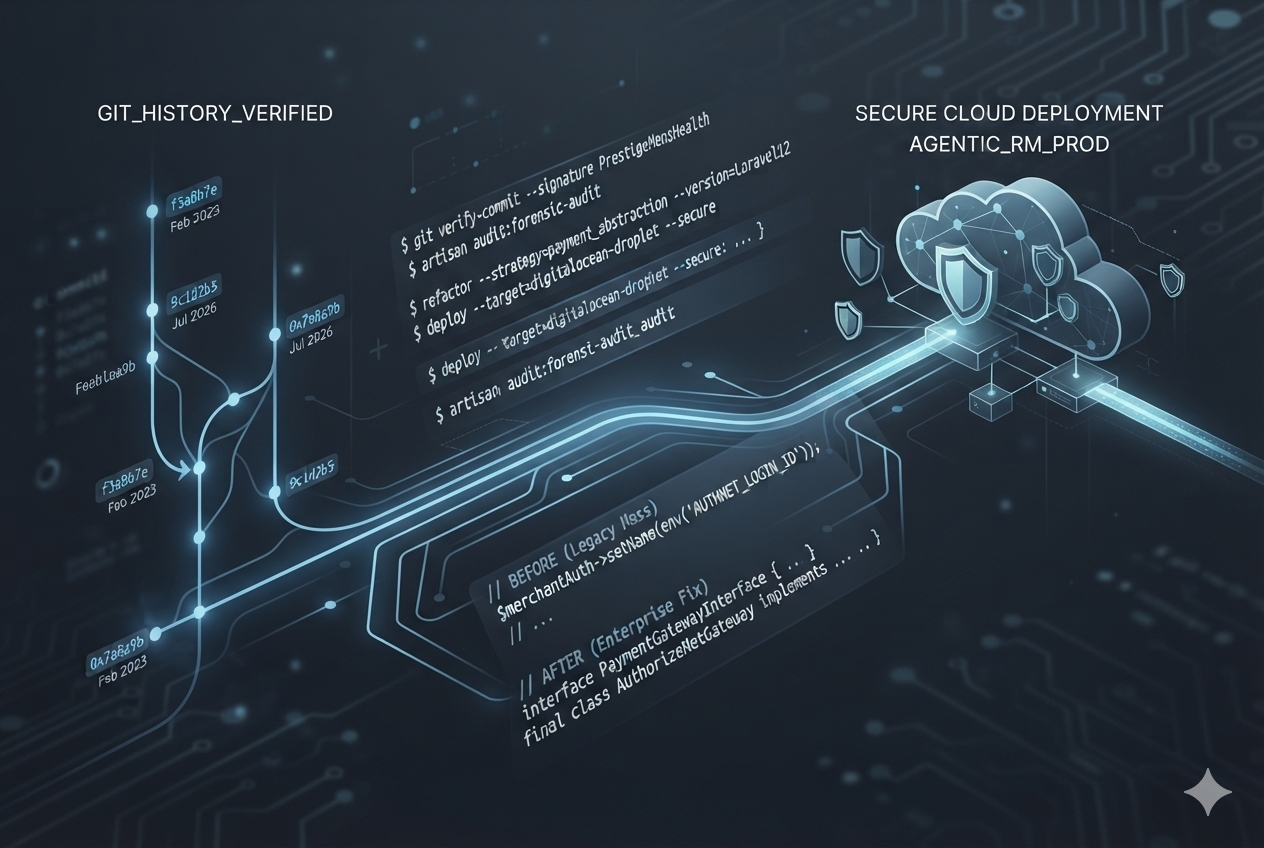
Four years is a long time, and memory is not a reliable narrator for engineering history — I didn't want this series to be "here's roughly what I recall happening." Every dated claim, every "problem found → solution" story, and every file or class name cited in these posts traces back to an actual git commit: a real commit message, a real author, a real timestamp, a real changed file — pulled directly from the public commit history on my GitHub account, krognome.
Concretely, that meant things like:
Filtering commit history to my own author identity (GitHub shows some of my commits as
krognome, others under my full name,Jacob Edmond Kerr— both are me, same person, just different git config at different points)Reading actual commit subjects in chronological order to reconstruct a real timeline, rather than writing from general impression
Cross-checking file paths changed in a commit against the narrative I was about to write, so a claim like "EMA can adjust store inventory" is backed by an actual file (
StoreInventoryAdjustmentService.php) touched in an actual commit, not just a plausible-sounding guess
I'll admit when the process caught its own mistake
The inventory management post originally had a paragraph claiming an AI-driven inventory reconciliation feature shipped in "early 2026," based on a keyword search for commits mentioning "ema" near words like "bagisto" or "inventory." On closer inspection, that match was a false positive — it had picked up a commit about a customer's email address (the substring "ema" is inside "email"), not anything about EMA, the AI system. I caught it, re-ran the search with proper word boundaries, found the actual real commits instead, and rewrote the section before it went anywhere near production. That correction is detailed in the post itself.
I'm including that here on purpose. The point of a verification-first process isn't that it never makes a mistake — it's that mistakes get caught and corrected before publication, and that the correction itself is also honest about having happened.
What's real and what's illustrative, explicitly
To be direct about where the line is in every post in this series:
Real, pulled directly from git history: commit messages, authors, dates, file paths, PR titles and numbers, and the general shape of what changed (e.g., "a notes-sync call was overwriting instead of appending").
Illustrative reconstructions, clearly labeled: the PHP/JS code snippets shown as "before" and "after" examples. These are written by me to show the shape of a fix a commit message describes — they are not copy-pasted client source code. Every post labels these as conceptual reconstructions for exactly this reason: publishing a real client's proprietary production source isn't something I'll do, even to prove a point, but showing the pattern of the fix is both useful to readers and faithful to what actually happened.
How I actually did the research
I used an AI coding agent (via Cursor) with direct terminal and git access, and gave it a specific, bounded job for each post: clone the relevant public repository, search commit history filtered to my author identity, and pull real commit subjects, dates, and file paths — metadata, not a read-through of the full proprietary source tree. For several posts, that meant literally running commands like:
git log --all --author="krognome" --format="%ai | %s" | grep -iE "kareo|tebra"
against the real repository, and building the narrative from what came back. I reviewed every post before publishing, but I wanted the first pass to be grounded in actual search results rather than my own recollection of four years of work — the agent doesn't have a memory to embellish, just whatever the git log actually says.
Verify it yourself
These are the repositories behind the series, and you don't need my word for any of it — clone them, search them, read the commit log directly:
github.com/krognome/PrestigeMensHealth — my own fork/mirror of the clinic's EHR, used for the SMS, Kareo/Tebra, Rx, patient portal, and EMA posts. I cloned this directly (no credentials) while researching this series, confirming it's publicly accessible.
github.com/krognome/prestige-store — the Bagisto/inventory-management repository, used for the inventory deep-dive. Also directly cloned and confirmed public.
github.com/adolfoand/PrestigeMensHealth — the original/primary repository, where most pull requests (including the autonomous Copilot agent PRs referenced throughout the series) were actually opened and merged.
github.com/joshuaschmidtmd/PrestigeMensHealth — Dr. Schmidt's own fork, where his hands-on commits referenced in the patient portal post live under his own name.
A fair question is why there are four related repositories instead of one. The honest answer: that's just what a real multi-year engagement with a changing cast of contributors looks like. One is the agency-originated primary repo, one is my own development fork, one is the founder's personal fork from when he started shipping his own features, and one is a standalone sibling project (the store). It's not tidy, but it's real, and I'd rather show you the actual shape of it than simplify it into something cleaner-looking but less honest.
If you want to spot-check a specific claim, every post quotes real commit subjects in plain text — search for the exact phrase (e.g. "fix duplicate clients and kareo sync" or "wtf refund bs!") in the relevant repo's commit log and you'll find it, with the date, author, and changed files right there.
What I'd still ask of you, reader
If you find something in this series that looks wrong, attributed incorrectly, or inconsistent with what the public history actually shows — tell me. I said at the start of this project that I'd go back through these posts by hand, and an honest correction is a better outcome than a quiet one. The goal was never to look impressive; it was to show real engineering work, verifiably.
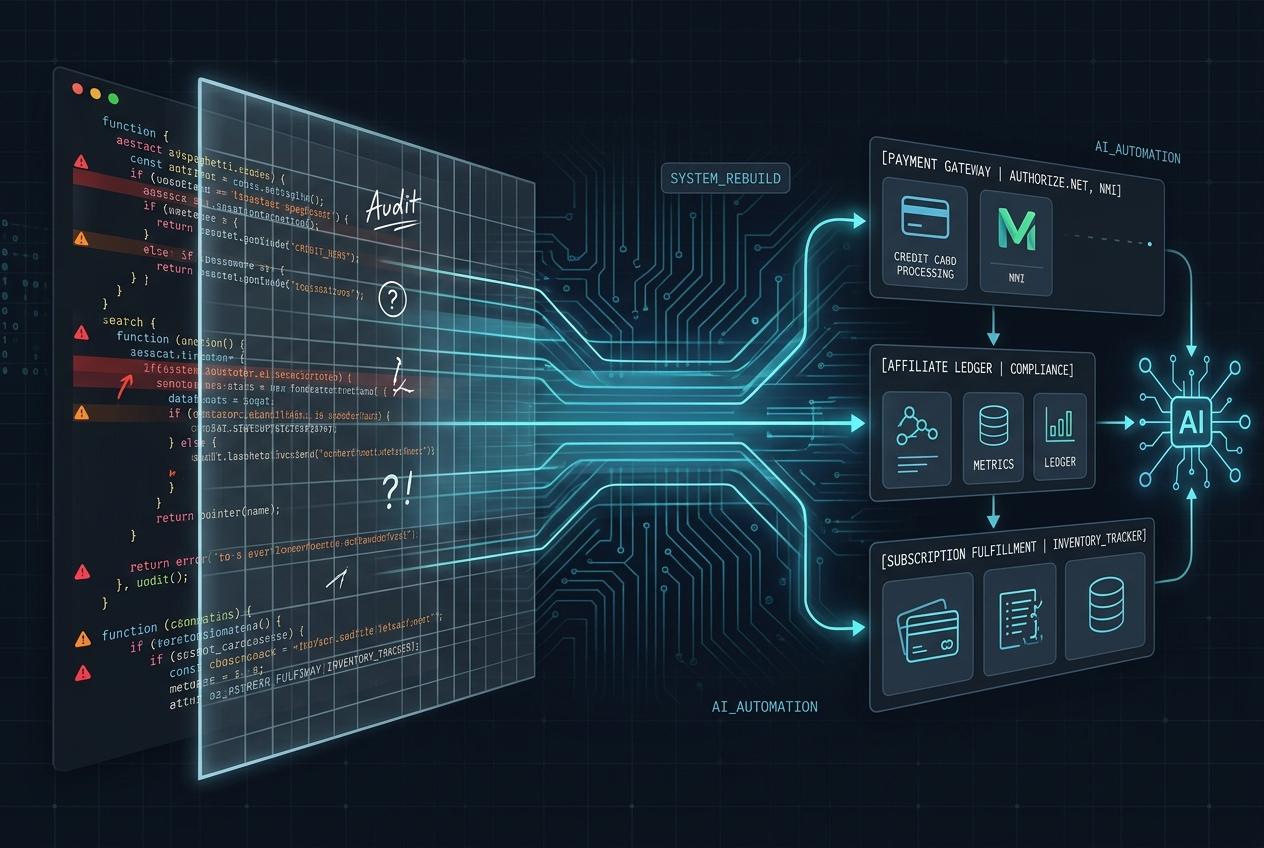
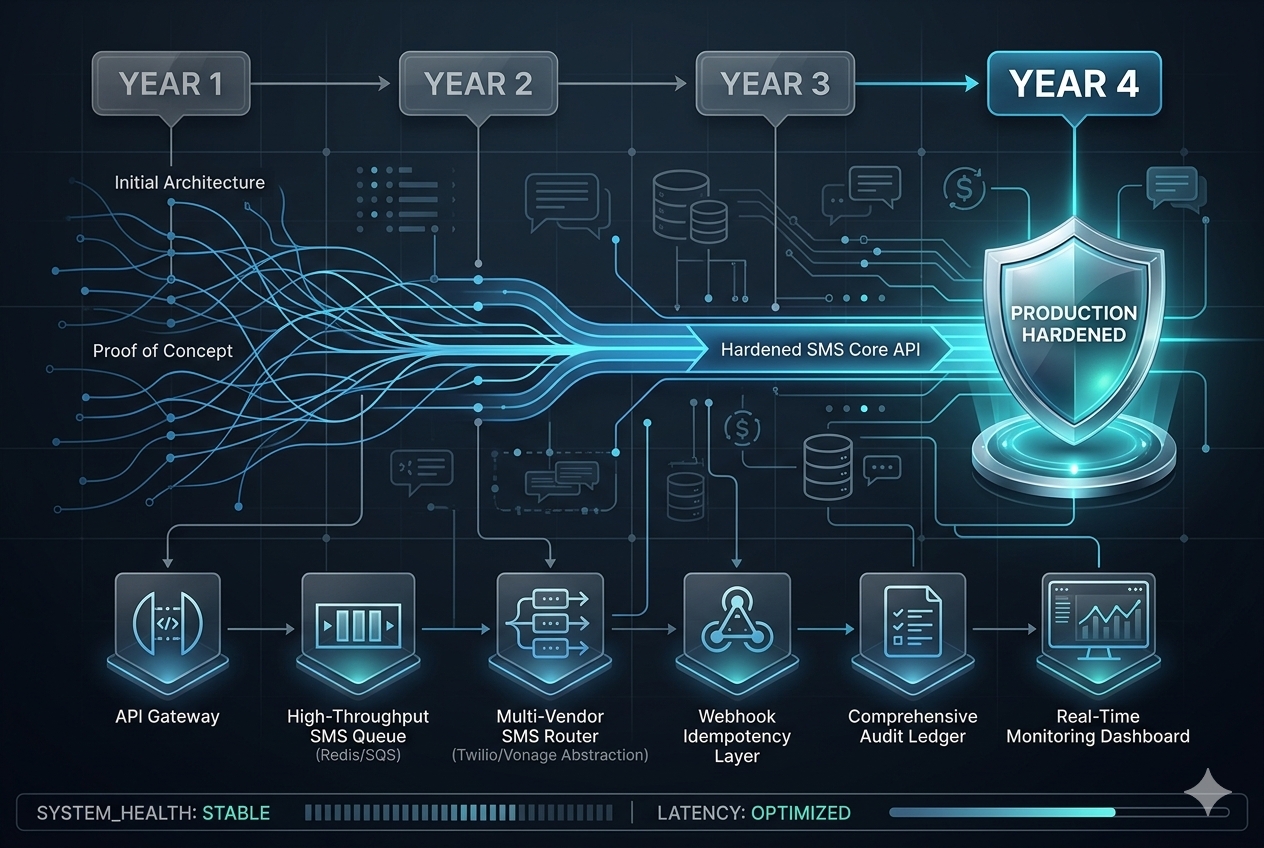
This is part of a seven-post series on the Prestige Men's Health platform — see the main technical breakdown, and the deep-dives on the SMS communication platform, the Kareo/Tebra EHR sync, the Rx order pipeline, the patient portal, the inventory management system, and EMA, the agentic AI layer.

Comments
No comments yet — be the first to share your thoughts.
Leave a comment
Your comment will be reviewed before it appears publicly.